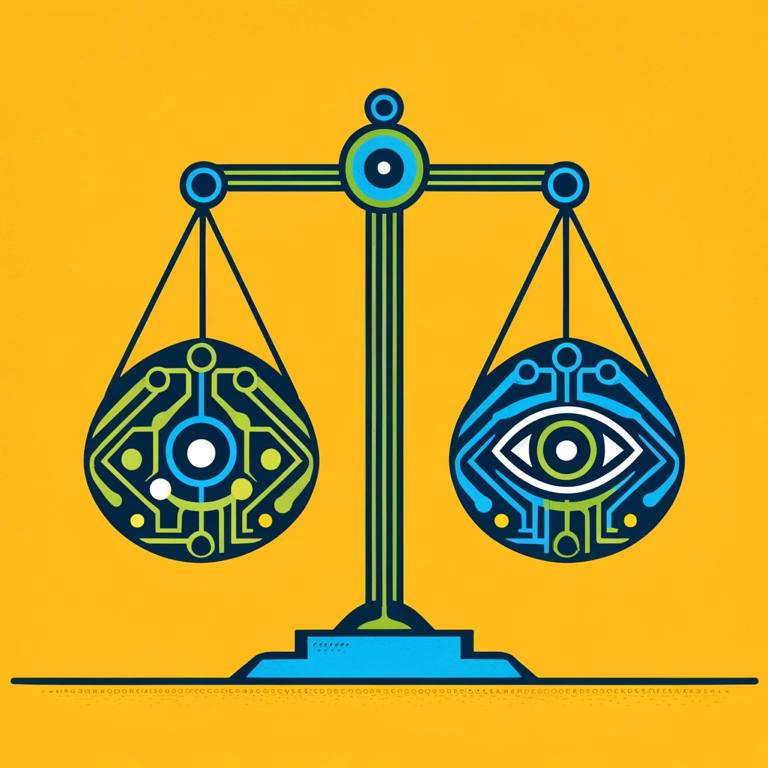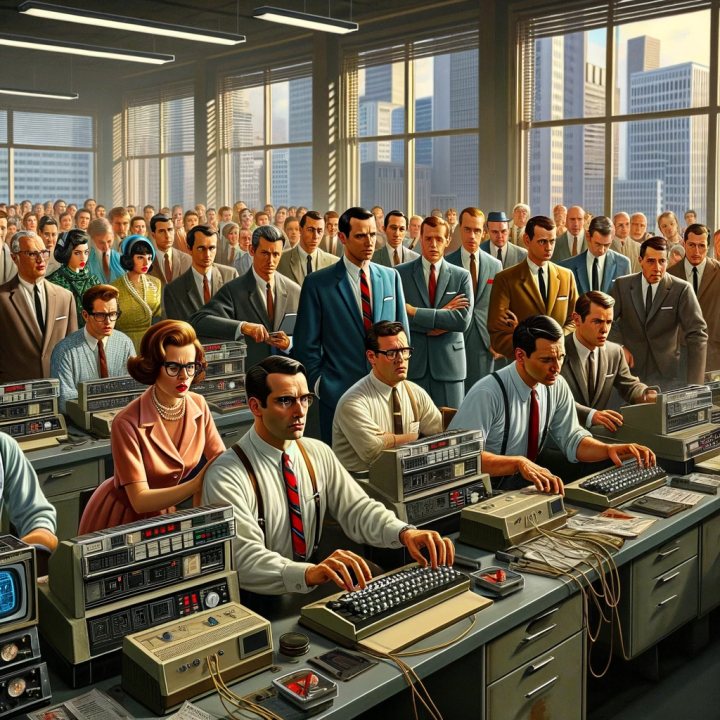
"Have you asked your employer for permission to use AI?" "Do you know the information you provide to the models will be available worldwide?" "How can you know what the people behind the models will do with your data?" and "Are you aware that the models contain bias? Just look at your illustrations."

While artificial intelligence captivates us, it also raises existential concerns.
Hunter S. Thompson, known as the father of gonzo journalism, delved into the unpredictable aspects of the American dream with his book "Fear and Loathing in Las Vegas" (1971), marked by excesses and existential questions. Although my approach is not particularly gonzo, I will share some reflections on the wild landscape of AI and the potential and concerns that the technology brings.
Artificial intelligence, especially language models like ChatGPT, has undoubtedly generated interest and engagement. Some have joined the exploration of possibilities for disruption and innovation. In contrast, others have taken a more analytical approach where caution and critical thinking have led to meaningful conversations about ethics, safety, and the broader societal impact of AI technology.
Moralizing and Scare Tactics
Some voices are pointing to the potential dangers of language models and image generators, and they do so with such assertiveness and overconfidence that they can be perceived as moralizing and scare tactics by people who view the technology through optimistic lenses.
Many may find both the scope and speed of AI development overwhelming. In some cases, scepticism may primarily be a strategy to appear more knowledgeable than is the case. Others may indirectly express a more existential fear of technology and how it will affect the future and their own life and work.
A Bizarre World of Bias Images
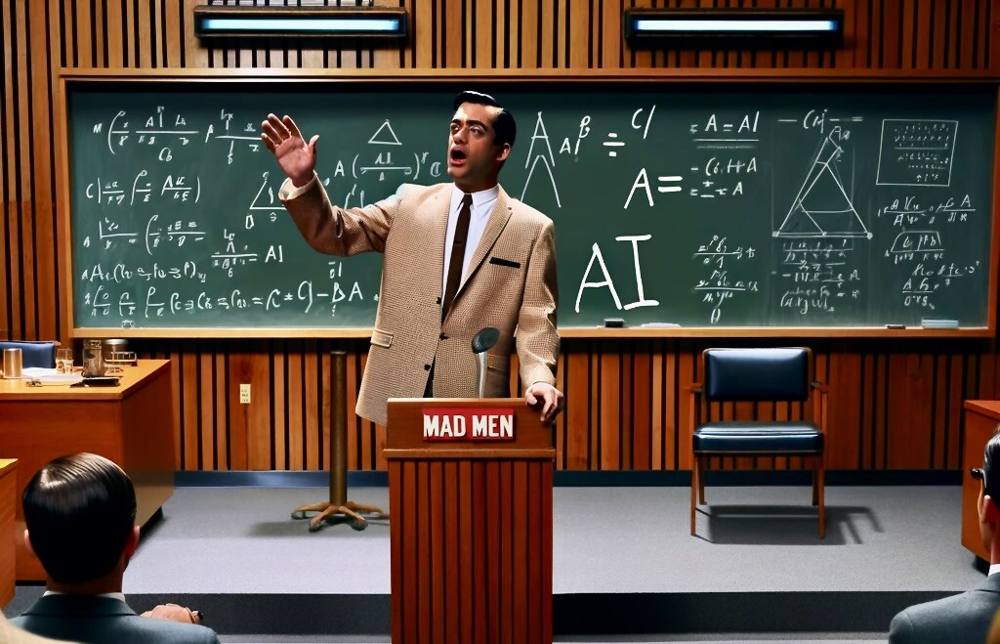
A recent comment I received that the illustrations in The Creative Nexus contain a gender bias has allowed me to comment on the built-in limitations of artificial intelligence. The illustrations here in The Creative Nexus have formed their little universe, stylistically inspired by Mad Men's TV series, but with a twist.
The characters are placed in strangely anachronistic situations, often surrounded by odd technology from different periods. The motifs reflect my prompt descriptions and the image generators' interpretations of ethnicity and gender roles. The newsletters allow me to highlight the possibilities and limitations of artificial intelligence "tongue in cheek."
Trying to Avoid Biases
The concern about bias in artificial intelligence is both relevant and necessary.
In that regard, the Nexus illustrations are an excellent example of the challenge with AI. Language models are trained on extensive datasets that can reflect human biases, which can lead to unintended skews. The leading players in the field say they are actively working to address the problem of bias through careful data selection, model fine-tuning, and incorporating ethical guidelines.
The question is whether we want more ethical machines than ourselves, but that is a topic for another newsletter.
More Rules are Put in Place
It is important to emphasize that players like OpenAI and Google have strict privacy and data security guidelines. The information you enter does not automatically become publicly available, as some seem to believe. The companies are subject to stringent regulations, such as European GDPR, which protect individual data. The EU's recently adopted AI Act will provide a comprehensive legal framework for safe, ethical, and trustworthy development and use of artificial intelligence.
Still, it is always wise to be mindful of what you share, especially when it comes to sensitive information, even though the risk of misuse of your specific data is low with serious actors.
Our Use Will Shape the Models
Language models like ChatGPT have been taught to understand and generate language through extensive training on large amounts of text. However, it is essential to understand the datasets so we do not imagine them as a gigantic library of books, articles, and other texts. Instead, the text is broken into countless fragments woven together by the model's neural network into coherent responses.
In other words, there is no danger that the text you get proofread by ChatGPT will appear in another person's chat.
When we interact with the language model, it does not retrieve answers from a store of previous conversations or specific texts. Each new dialogue is just that – new. The model does not remember previous interactions but uses its broadly trained language understanding to create each answer on the spot.
That's why you don't get the same answer to the same question.
Although ChatGPT does not store our conversations or ideas for future use, our interaction with the technology still plays a role in how it develops over time. Just as language contributes to linguistic development, our use of and engagement with artificial intelligence shapes its future direction.
What is Allowed at Work?
Regarding the question of whether AI can be used at work, I recommend reading some of my previous newsletters.
In the issue Be a Driving Force: 15 Tips for How You as an Employee Can Introduce AI in Your Workplace, you can read about how to proceed responsibly if you see that AI can be helpful in your job.
In Employees at the Forefront of AI Use at Work. Management Lags, I go a little more in-depth on why employees are now at the forefront of introducing AI in many workplaces.
Opportunity and Risk
If all parts of society have knowledge and skills about the use of AI, it can contribute to informed decisions about the development and application of the technology.
The importance of broad participation and competence building in the population regarding AI cannot be overemphasized. Only in this way can we ensure that AI is developed to reflect a diversity of needs and values. This is now a central theme in the public debate on AI and something we should all engage in.
In this conversation, we all also have a responsibility to maintain a balance between sober risk assessment and openness to opportunities.
A Resource for Everyone
Excessive fear can prevent us from harnessing technology's positive potential. Knowledge and responsible use are the keys to ensuring that AI becomes an accessible resource for all, not just a privileged elite with the "right" expertise. Concrete strategies for finding this balance can include open dialogue, interdisciplinary collaboration, continuous learning, and adjustments along the way.
By embracing both the serious and the wild, fascinating and fun sides of artificial intelligence, we can all contribute to a balanced and holistic understanding of this exciting technology. By promoting a responsible approach to AI, we can decrease fear and ensure that the technology serves all of society.
Use of AI
The illustrations for The Creative Nexus are created using the AI tools Midjourney and Dall-E based on my directions and choices. However, AI tools are a great help, and my ideas, human judgment, and professional insight guide the final content.