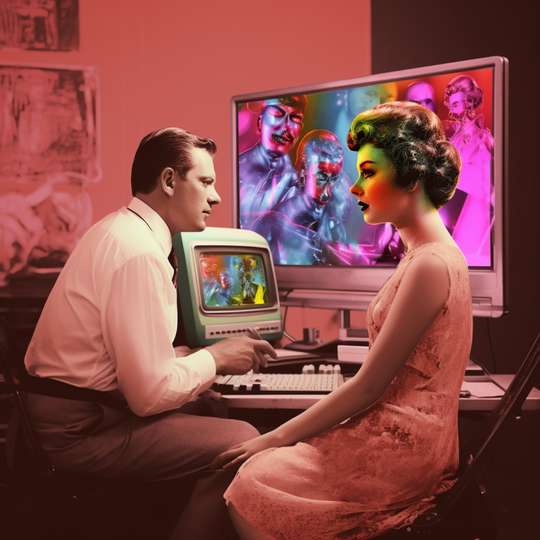
Welcome to the first edition of The Creative Nexus for 2024, the newsletter on artificial intelligence, communication, and creativity. This edition explores how creativity can unlock the potential of artificial intelligence. It also discusses how AI is changing our perceptions of innovation and creative thinking - and how to allocate the Government's AI billion.
Creativity has always been a driving force in my work within communication and dissemination. It has not operated without boundaries, as in art, but has been carefully adapted to the demands of the media and the strategic goals of the organisation. Along the way, I understand the importance of balancing creativity against structure and purposefulness. Integrating new ideas with established issues has been crucial to ensure relevance and avoid derailments.
The Perilous Side of Creativity
The book The Dark Side of Creativity: Original Thinkers Can Be More Dishonest (2010) explores the complex relationship between creativity and unethical behaviour. The study shows that individuals with creative personality traits tend to cheat more than less creative individuals.
Interestingly, the research suggests creativity can predict unethical behaviour better than intelligence. Furthermore, the study shows that individuals encouraged to think creatively were more inclined to act dishonestly than those not stimulated to think creatively.
These findings also support my observations about the dual effect of creativity in the workplace, where, on the one hand, it promotes innovation and engagement. At the same time, on the other, it can be perceived as threatening and risky, especially when existing norms and structures are challenged.
Creative workers are often valued for their fresh perspectives and ability to think outside the box. They are famous for their unique contributions until they challenge established structures - when they want to "tear down to build something new and better".
At this moment, creativity shifts from being an enriching force to being seen as a threat. The creative impulse that dares to destabilise what is known is often met with resistance and can even marginalise the creator.
Thus, creativity also triggers a paradox: those who can innovate and renew may also be perceived as destructive by those clinging to the status quo. This is particularly evident when creativity is not just an exercise in aesthetics but a driving force for structural and conceptual change.
Just as workplace creativity encompasses opportunities and challenges, a similar dynamic exists in the interplay between creativity and artificial intelligence. This duality shows how AI can catalyse groundbreaking innovations while challenging existing structures and norms.
The AI Expert Group's Memorandum
This brings us to the Norwegian Government's AI billion and the Norwegian Research Council's advisory expert group. This initiative also raises questions about how Norway should navigate AI-based research and innovation to promote innovation and responsible development.
The expert group's two-part memorandum on the Government's AI billion, published on 21 December 2023, explores how the Government's investment can steer research and innovation in a direction that acknowledges both the constructive and the challenging aspects of creative use of AI. Key themes such as trust, accountability, and - indeed - the role of creativity in technology development are highlighted.
Expert Group's Deliberation:
Second memorandum from the advisory specialist group for the AI initiative: General measures
Radical Innovation
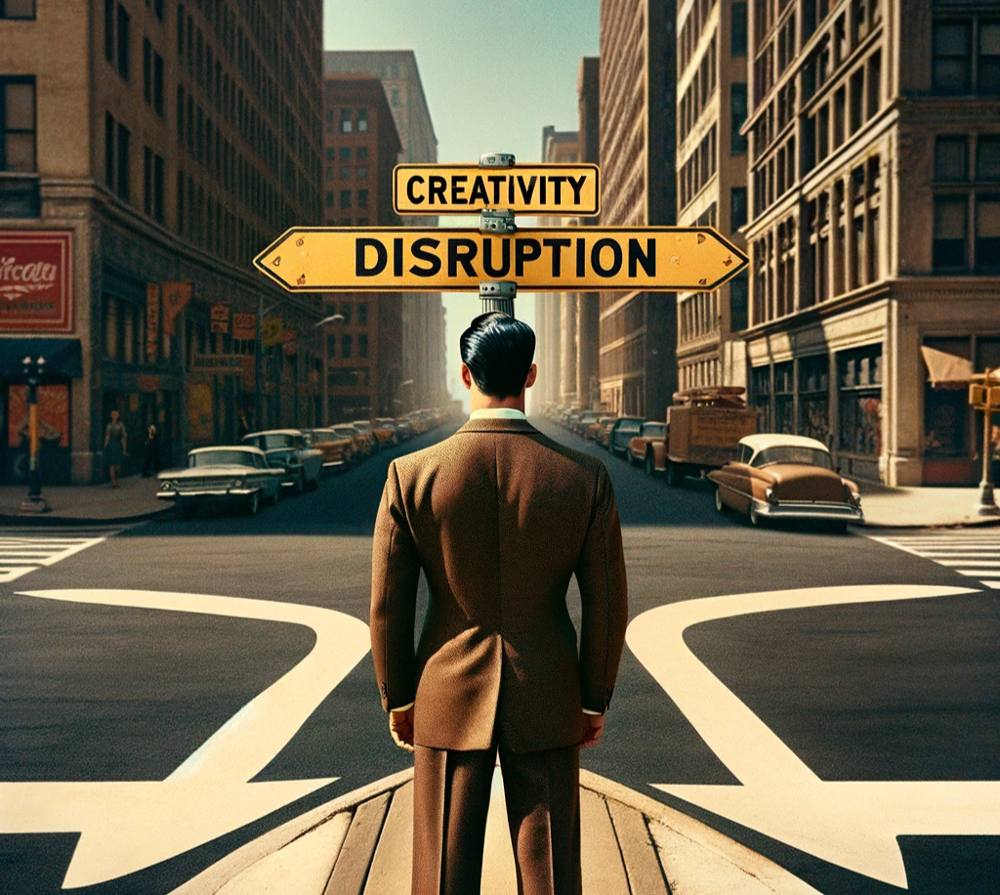
During the video-streamed launch of the AI report, the Research Council's area director Anne Kjersti Fahlvik questioned whether the report uses 'creativity' as a milder term for more dangerous concepts like 'disruption' and 'radical innovation'. The etymological meaning of the word disruption, or "disruption", is known to be "to tear down" or "to break up" something.
Tanja Storsul, the head of the committee and vice-chancellor at OsloMET, defended using the concept of creativity. She emphasised that, precisely, human creativity is central to artificial intelligence. Focusing on creativity, according to Storsul, acknowledges AI's capacity for innovation and underscores the importance of human insight and participation in shaping the future of technology.
Disagreement on Strategic Choices
The report from the expert group emphasises the importance of a solid AI foundation, focusing on longevity and interdisciplinarity. Four strategies for AI development are proposed, including establishing national and independent centres, a project portfolio, and a competence hub. But it is precisely in which strategy for organising and allocating funds that opinions in the expert group are divided.
Exploring AI Opportunities
This brings us to the core of our AI initiative: How can we best utilise AI to meet societal challenges? We must look beyond just strategic organisation. AI is about more than just technology; it is an extension of our creativity, which can enrich and challenge our understanding of innovation. As with creativity in the workplace, AI has both its constructive and disruptive sides.
We must balance the opportunities for innovation with ethical and practical considerations. Next Steps in the AI Initiative Now, the insights of the expert group and the written submissions the Research Council has received will be considered to further shape the Government's AI initiative.
The first AI billion funds will likely be allocated during 2024. I wish the discussion around a public AI initiative could be expanded as soon as possible. Never before have so many parts of the population had access to such powerful technology at such low cost. And digital innovation can, as we have seen many times over the last half-century, come from places we least expect it.
AI technology should not only be developed but also implemented and integrated into everyday life – in all parts of the public sector, organisations, the business world, digital life, media, entertainment, and across all layers of society and professional life.
To realise AI's full potential and ensure that the technology is used to solve real societal challenges, we must look beyond the traditional circle of AI experts. By including a broad spectrum of voices – from subject matter experts to everyday users – we can identify the most constructive uses for AI and avoid the more disruptive aspects that can arise when technology is not adapted to society's needs. Combining creativity, practical application, and focusing on societal benefits can help ensure that AI becomes a positive force for society and everyone.
Use of AI
The illustrations for The Creative Nexus are created using the AI tools Midjourney and Dall-E based on my orders and choices. While AI tools greatly help, my ideas, human judgement, and professional insight guide the final content.