Welcome to the latest instalment of The Creative Nexus, your bi-weekly Newsletter about the intersection of AI, communication, and creativity. In this issue, I delve into the influence of Artificial Intelligence on the job market.

Generation X: From Slackers to Shapers
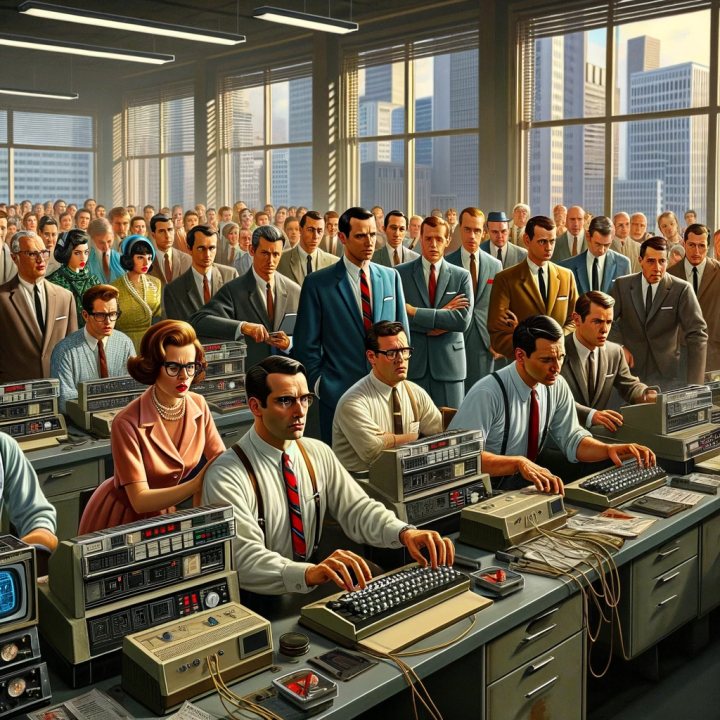
I belong to a generation that has shaped the digital age. From the initiation of the internet to the current evolution of AI, we have played a vital role in these noteworthy transformations.
Interestingly, the name of my generation was introduced in a book related to professional life.
Douglas Coupland's influential 1991 novel, "Generation X: Tales for an Accelerated Culture", captures the spirit of those born in the 1960s and early 1970s. This generation, defined by various experiences marked by feelings of estrangement, dissatisfaction, and a sharp sense of social irony, is represented uniquely in this story. The portrayal has since served as a lens to understand how our generation navigated our early adult life.
After the book's release, popular culture amplified these themes, notably in films like "Slackers" and "Reality Bites". These movies underscored our generation's irony and avoidance of serious matters, such as routine work life and conventional existence.
However, just a few years post the book's release, the digital revolution, ignited by the emergence of the internet, provided an unexpected escape from a future of the dreary 'MacJobs' prophecy outlined by Coupland - a term used to describe low-pay, low-status jobs with scant skill requirements or advancement opportunities.
Suddenly, our generation found ourselves not trapped in stagnant careers as predicted but in the lead of notable digital professional advancements, admittedly still with a somewhat ironic approach.
Even though we emerged as unexpected pioneers during the digital revolution of the 90s and 2000s, our generation never fully transitioned into becoming "digital natives". We often harbour a sense of nostalgia for our pre-digital childhoods. Contrasting with our younger siblings and children, we tend to feel uneasy about ideological movements or grandiose claims like wanting "to change the world", possibly a sentiment rooted in not-that-long-ago stories about the second world war, experiences with the Cold War and the fall of the 20th century’s great ideologies.
At the same time, it is undeniable that many from this generation do not navigate the digital landscapes as effortlessly and swiftly as the digitally native millennials, not to mention Generation Z, who are now on the cusp of entering the workforce.
As we stand on the brink of the AI era, we must wonder whether Gen X's particular outlook continues to mould our approach and comprehension of AI's potential and challenges.
Will our unique blend of scepticism, realism, and irony guide us through these unexplored territories? Our generational qualities, thus, not only shape our perspective but also impact how we choose to navigate this transitional phase. These traits are our strengths; conversely, they may become hurdles that prevent us from adapting fully to the changes. This leads us to ponder the practical implications and concrete realities of the AI revolution.
AI & the Workplace: A Glance at the OECD Report
We find some startling predictions when we look at a recent OECD report. It suggests that around 27% of high-skilled jobs across their 38 member countries could be at risk due to AI-driven automation. The picture painted by the OECD is slightly unsettling. While AI transforms careers rather than replacing them outright, we cannot overlook the potential for wage decreases and job losses.
While it was previously assumed that automation would primarily affect manual jobs with lower education requirements, we now see that AI also automates tasks in so-called knowledge professions.
Despite relatively low AI adoption, the OECD report suggests that the rapid advancements, declining costs, and growing availability of AI skills indicate that no less than an AI revolution is near.
The report highlights that AI technologies can improve efficiency and productivity across various sectors, enhancing worker engagement, autonomy, mental health, and potentially higher wages.
However, the report also underscores significant challenges. AI adoption has substantial costs, requires necessary skills, and can lead to potential job losses, increased work intensity and stress, ethical issues surrounding surveillance, privacy, bias, and transparency, the potential impact on worker autonomy, and the risk of exacerbating bias and disadvantage in the labour market.
In the creative sector, individuals who produce content face specific concerns. Copyright becomes even more intricate in the context of AI. AI can have content independently, which raises complex questions about ownership and rights, a question the US Senate convened a hearing on this week to address.
Conducting the Digital Orchestra: My Personal Experience with AI Transformation
In grappling with these complications, we can't ignore the firsthand experiences of creative professionals whose interactions with AI are particularly impactful. A testimony to this is my journey in the field of communications.
AI-based tools have already allowed me to transform my working methods, relieving me from monotonous tasks and, at the same time, expanding my skills in communications. The transformations are wide-ranging, encompassing text, photos, videos, and digital platforms.
Establishing this bi-weekly Newsletter and experimenting with automated video production are two opportunities that have emerged, illustrating the transformative power of AI in my work.
In the new AI era, I can perform tasks that before required a specialised team. It's like shifting from playing a single instrument to conducting an orchestra and playing all the instruments simultaneously.
AI & the Future: Balancing Benefits and Risks
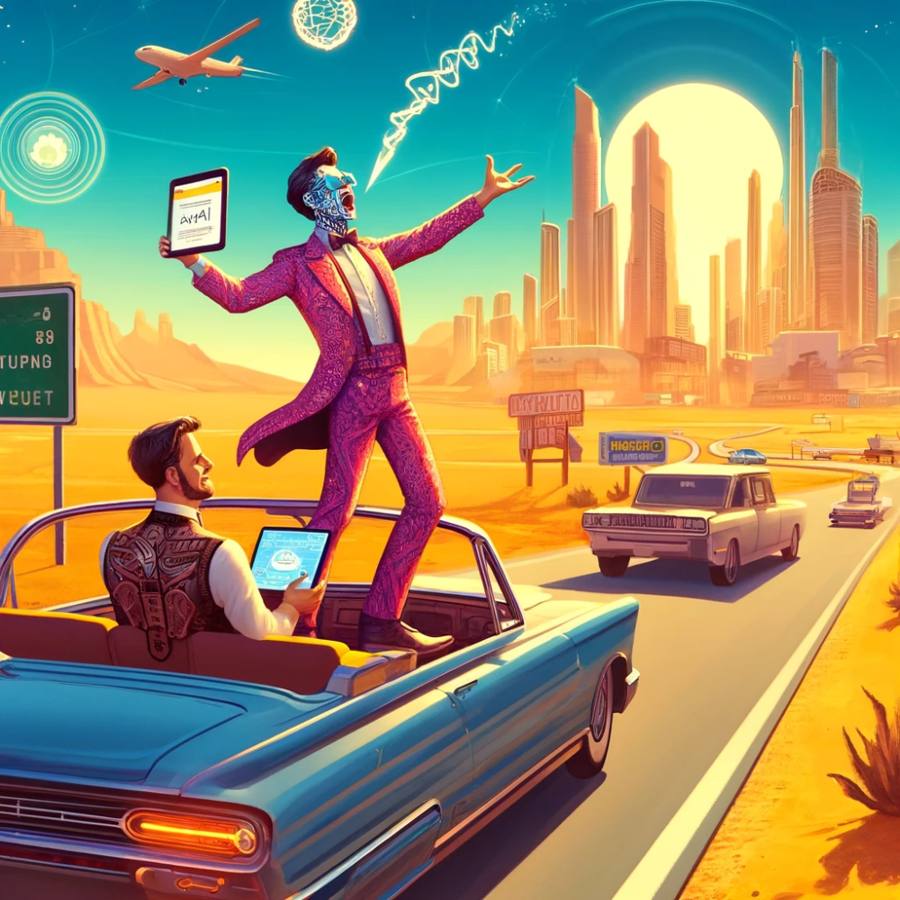
With our unique blend of experiences, from the dawn of the internet to the rise of AI, Generation X now finds itself pivotal in guiding the next stage of technological advancement. Considering its potential benefits and risks, we hold significant sway in determining how this new technology is integrated and utilised.
But, as we approach another technological revolution, we face a pertinent question. Could our actions unknowingly compromise the future job prospects of younger generations? This poses a daunting responsibility for our generation - to navigate the delicate balance between harnessing AI's potential and safeguarding against its risks. The goal should be to leverage AI's opportunities while mitigating its potential downsides.
However, our past mistakes echo cautionary tales. The younger generations scrutinise our generation's track record, particularly our past failure to curb ongoing environmental damage. In this context, the AI revolution presents a unique opportunity - one where we can learn from our past and avoid repeating past errors.
Many will be open to embracing AI and acquiring new skills, even as some of our traditional roles become obsolete due to technological advancements. However, voicing concerns about AI's potential threats and dangers puts us at risk of being perceived as outdated. Are we prepared to face such criticism? The challenge lies in finding the right balance - ensuring a measured progression of AI technology, where potential risks are acknowledged alongside benefits. In this quest, we must temper the unchecked advancement of AI, advocating for a thoughtful approach that balances both progress and prudence.
The Future of AI Policies & Institutions
To hold this position, we need support. Robust institutions and thorough policies are essential to navigate AI's risks and harness its potential benefits. As countries worldwide adapt, reinforce, and enforce AI-centric laws, leadership within institutions and training programs is critical for a successful transition. This selection of key areas, gathered from current discussions, represents my perspective on what our governing bodies should focus on in the upcoming period:
- Advocate for continuous education and skill development policies to adapt to an AI-driven economy.
- Create strategies that assist workers affected by AI transitions, including accessible retraining options.
- Establish regulations promoting AI transparency to lessen bias and protect user rights.
- Update laws to safeguard intellectual property in an AI-dominated era, including rules for AI-created content.
- Strengthen data protection rules to address AI-related issues such as privacy, data misuse, and breaches.
- Formulate policies that regulate ethical AI use, tackling concerns like surveillance, manipulation, and deep fakes.
- Set AI fairness and transparency guidelines, preventing AI systems from reinforcing bias.
- Ensure AI designs respect human rights like privacy and non-discrimination.
Conclusion: Reality Still Bites
Using a generational lens to understand profound societal shifts, such as Generation X, might seem superficial, but it offers valuable insights. Our generation has been privy to the advent of the internet and the rise of digital technology, providing us with a unique perspective on the fast pace of these technological changes. As we straddle the divide between the analogue and digital worlds, we can contribute to balancing the benefits of AI with its potential risks. Thus, this generational viewpoint doesn't diminish these significant societal changes but enhances our understanding and informs our response to them.
In this journey from a pre-internet era to an AI-driven world, Generation X has undergone a massive transformation. The landscape we face is complex - AI has reshaped creative possibilities and simultaneously brought forth challenges such as potential job loss, privacy issues, and the constant need for reskilling.
Then comes an ironic twist: we, once labelled the 'slacker' generation, are now in a pivotal position in shaping a second technological revolution. We are steering the direction of AI to supplement, not supplant, human capabilities. Our collective past and unique generational viewpoint are crucial in approaching this endeavour. And while 'reality still bites', our focus remains clear: the immediate tasks and the future we're helping to create. As a generation, we aren't just witnesses to these changes; we're an integral part of shaping them.
For those who enjoy a humorous take on different generations' approaches to work-life challenges, check out Champagne Cruze's profile on TikTok. This creator delivers witty commentary that illustrates the generational divide with a dash of humour and reliability.