
Istanbul’s cats sprawl across ancient marble, rule modern design shops like they own the place, and raise litter after litter in backyards and leafy parks, where their kittens play alongside the city’s children. They’re far more than just charming — they’re living cultural heritage.
Istanbul has pulse — and fur. With cats draped over mosque steps, darting between café chairs or sunbathing in bookstore windows, the city feels like one giant feline republic. If you're a cat lover, Istanbul isn’t just a city to visit. It’s a city to follow — paw by paw.
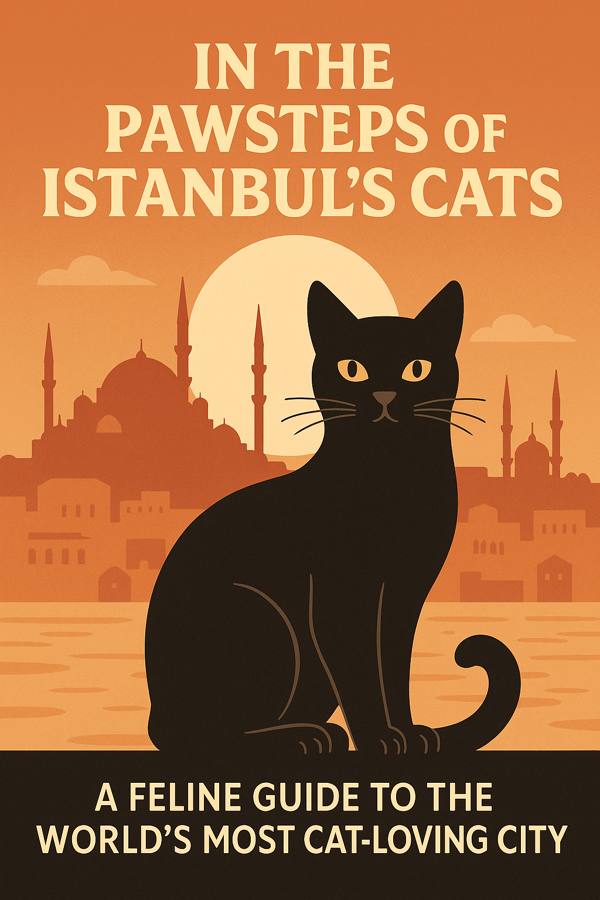
In this guide, you'll discover the places, people, and stories that make Istanbul one of the most cat-friendly cities on Earth.
1. Hagia Sophia & Topkapı: History with Whiskers
Start where time stands still. At Hagia Sophia, cats glide across centuries-old marble as if they’ve always belonged. One, named Gli, became a global celebrity — even Obama stopped to greet her. Her descendants still rule the grounds today.
Nearby at the Topkapı Palace, cats lounge in the sultan’s courtyards and curl up beside imperial fountains. Don’t be fooled — this palace is more than a harem. It’s a sprawling complex with libraries, kitchens, porcelain rooms and sweeping views of the Bosphorus. And the cats? They’re everywhere, right where they belong.
2. Neighborhood Guides: Cihangir & Balat
In Cihangir, downhill from Taksim Square, café cats stretch across cushions, vintage-shop cats eye you from window displays, and bookstore cats sleep on poetry collections. It's bohemian, breezy — and unmistakably feline.
In Balat, the Golden Horn's old-world charm is guarded by cats who perch on painted stoops and sleep on the steps of synagogues and churches. Locals put out food, blankets and names. These aren’t strays. They’re neighbors.
3. Where Cats Read: Kırmızı Kedi Pera
Walking İstiklal Avenue is like being carried through a living artery of Istanbul — from the modern bustle of Taksim to the faded grandeur near Galata. Along the way: arcades, baklava vendors, bookstores, tea houses, consulates, street musicians, and everything in between. It’s dazzling, crowded, chaotic — and intensely alive.
And then, at the very end of the avenue, just steps from the entrance to Tünel — the world’s oldest underground funicular still in operation — you’ll find Kırmızı Kedi Pera, The Red Cat Bookstore.
Inside, the pace shifts. The noise fades. Warm lighting and the scent of coffee invite you to linger—shelves brim with Turkish and international literature. And somewhere — as expected — a cat will have claimed the seat where the sunlight lands.
4. On the Asian Side: Kadıköy & Moda
Cross the Bosphorus by ferry and arrive in Kadıköy, where cats patrol the fish market and nap in record stores. In nearby Moda, they laze in seaside parks, curl up on poetry benches, and join tea circles like old friends.
It’s slower here. Cats stretch in sun patches while students read or lovers share simits. Many shopkeepers build wooden shelters — kedi evleri — to shield their cats from wind and rain. No one calls them strays. Here, cats are family.
And in Ziverbey, a quiet corner of Kadıköy, you’ll meet Tombili — or rather, his statue. The famously chill tuxedo cat became an internet legend for reclining like a tiny philosopher, still watching the world go by — from his perch between East and West, unfazed, unbothered, and exactly where he wants to be.
5. Art & Icons: The Istanbul Cat Museum
Back across the water in Galata, you’ll find the Istanbul Cat Museum — part gallery, part rescue mission. With Ottoman cat art on the walls and real cats padding through the rooms, it’s both whimsical and quietly profound.
Half of the proceeds go to support street cats. The rest goes to keeping the doors open — for visitors, and for the cats who live there.
It’s not just for cat lovers. It’s for anyone who wants to understand Istanbul through its most gentle, sly citizens.
6. City of Migrants — and Cats with Mismatched Eyes
Among the many cats that roam Istanbul’s streets, one particular type stands out like a whispered secret from the east: the Van cat. These striking white cats, known for their silky coats and their eyes — one green, one blue — originate from the Lake Van region near the Armenian border.
Long celebrated as a national treasure, Van cats are not just beautiful — they’re also famously fond of water, unlike most of their feline cousins. Stories abound of them swimming in lakes, chasing fish, or casually dipping a paw into a basin to stir things up.
In recent decades, as many people from eastern Turkey migrated westward in search of new lives, so too did these cats. Today, you might spot one on a quiet Istanbul side street: snow-white, elegant, and carrying a calm echo of distant mountains and freshwater shores.
Like many of the people in this city, they’ve left their origins behind but brought their distinct identity with them. And as with all things in Istanbul, the mix makes the city richer.
7. Day Trip to Purrfection: Büyükada & the Princes’ Islands
On Büyükada, the largest of the Princes’ Islands, there are no cars — only bicycles, horse-drawn carriages, and cats, dozens of them.
They greet you at the ferry. They nap under pine trees, or sun themselves on crumbling villa porches. The sea breeze, the silence, and the soft paws make for a kind of feline utopia.
8. Do Istanbul’s Cats Have a Good Life?
In many ways: yes. Most cats are not owned — but they’re not abandoned either.
Locals care for them. Feed them. Take them to the vet. The municipality provides shelters and runs spay and neuter programs. Cats are part of the public life: in mosques, cafés, courtyards, and even government buildings.
And then there’s this story:
The Prophet Muhammad once rose to stand but saw his cat asleep on his robe. Rather than disturb her, he cut off the sleeve. A gesture of respect — still echoed across Istanbul’s streets, where cats are welcome wherever they choose to rest.
Of course, life on the street has risks. But in this city, cats walk with a kind of dignity. And they are not alone.
9. Speaking Cat in Turkish
The word for cat is kedi — a word you’ll hear on every corner.
To call them, locals use sounds like “pisi pisi,” “kss kss kss,” or “pspspsps”. A soft crouch and a “gel bakalım” (“come here, let’s see”) might do the trick.
Will they come? Maybe. You’re in Istanbul. Cats decide.
10. Final Tip: Let the Cat Lead
Put away your map. Let your steps echo those of a cat — curious, unhurried, and attuned to the quiet corners of the city. They don’t rush. They don’t follow crowds.
They find sunlit rooftops, hidden courtyards, warm stone ledges and unexpected stillness. Follow not the cat, but the feeling. It will lead you to the Istanbul that purrs.
Afterword from The Creative Nexus
Istanbul has been a part of my life for a long time. Since my first visit in the nineties I’ve returned year after year — often staying for weeks at a time. The city continues to change, but one thing remains constant: the presence of cats, not as an oddity, not as decoration, but as part of the city’s living rhythm.
I didn’t come here to write about them. But the cats found me — in courtyards, on ferry docks, in the shade of bookshop awnings — and reminded me of something I often forget: not everything needs to have a purpose to have value. A cat asleep on a warm stone doesn't optimize anything. It simply is.
And maybe that’s the point.
Thank you for reading The Creative Nexus — where AI, communication and creativity intersect, sometimes on four paws. If this story resonated with you, feel free to share it. And if you know someone who needs a gentler way of seeing the world, you know what to do.
Until next time
Kari