How is OpenAI impacting our work processes and creative pursuits?
This month, Ian Beacraft, CEO and Chief Futurist at Signal and Cipher, illuminated our ongoing transformation's profound nature during his talk, 'Creative Machines - AI and Generative Future. Beacraft asserts that we are at the brink of the most monumental shift in the history of knowledge work, poised to surpass even the transformative leap from an agricultural to an industrial society in terms of impact.
Making AI Understandable and Relevant
Welcome to The Creative Nexus! If you're new here, let me introduce myself. I'm a seasoned communication strategist with over twenty years of experience in the humanities, bridging the gap between science, health, and public understanding.
You'll find a rich assortment of experiences and insights in this space. We'll delve into innovative ideas, toy with novel concepts, and discuss AI's profound impact on communication and creativity.
My career in communication and disseminating academic and scientific knowledge has led me to explore various facets of technological development, including robotics, mechatronics, and artificial intelligence. For five years, from 2016 to 2021, I took on a significant role in leading the communication and visualization for the Norwegian AI project, Domore!. This groundbreaking initiative, based at Oslo University Hospital, focused on developing AI-based cancer diagnostics.
While working with Domore!, one of my responsibilities was establishing common ground with partners, decision-makers, stakeholders, patient organizations, media and the general public. To be able to do so, I had to construct a language about a subject few knew very little about. In 2016, the world was still far from incorporating the concept of artificial intelligence into everyday life.
The strategic goal was to incite interest and engagement for technology that could predict and diagnose cancer more precisely than even seasoned pathologists. Rather than focusing primarily on the sheer brilliance of the research, my approach was to anchor the technology to our very human needs. For instance, consider how much anxiety and worry could be avoided when people can access fast and reliable test results. Or how the accuracy of patient treatment could be significantly improved if medical specialists had more precise tools at their disposal. In these ways, AI technology is more than just a cold, abstract concept; it becomes a tangible solution to genuine human concerns.
AI in the Communications
While doing this work, I also began reflecting on how AI would impact my profession. The communications profession and the media industry have already been through several disruptions, including the advent of the internet, social media, and automation.
Now, just a few years later, my profession has undergone rapid evolution as numerous tasks in communications have become more efficient, thanks to the support or automation provided by OpenAI.
The Paradigm Shift
The OpenAI platform ChatGPT has gained over 100 million users within the last months. For those in knowledge-based professions, thinking of a future when machines creatively assemble information in new contexts is undoubtedly intriguing. At the same time, the scenario invites a deep discussion about AI's implications, autonomous decision-making abilities, and the potential consequences for those engaged in knowledge-intensive and creative professions.
This historic paradigm shift has, for my part, fueled my inspiration, kindling my creativity in unexpected ways. OpenAI has equipped me with innovative tools for information dissemination and broadened my product as AI handles tasks that used to be performed in traditional digital ways, quicker, better structured, and more accurately. This frees time and energy to tackle problems once thought too complicated or time-demanding.
Entering the Era of the Creative Generalist
Drawing parallels with the industrial revolution that mechanized physical labour, Beacraft asserts that our era is now digitalizing cognitive tasks daily. He believes we're at the threshold of a new epoch—the era of the Creative Generalist.
Even though we may eventually lose the jobs we have today, the first thing that will happen, says Beacraft, is that our job descriptions, rather than the jobs themselves, will change. When you understand a field but need more formal training to perform the work, your secret weapon comes in: AI.
Many of us were raised with the notion that specialization and niche mastery were vital in securing a job. However, Beacraft proposes a shift in this mindset. He emphasizes the future's increasing demand for generalists, individuals with deep knowledge across various fields who can fluidly navigate different domains, acting as a 'connective tissue' to integrate them.
I find this prospect both exciting and threatening.
On the optimistic side, this notion of extensive cross-disciplinary knowledge and integration forms the backbone of a strategic method for introducing AI in publishing. Global news agencies are increasingly embracing this approach.
A strategic method for the Introduction of AI in Publishing
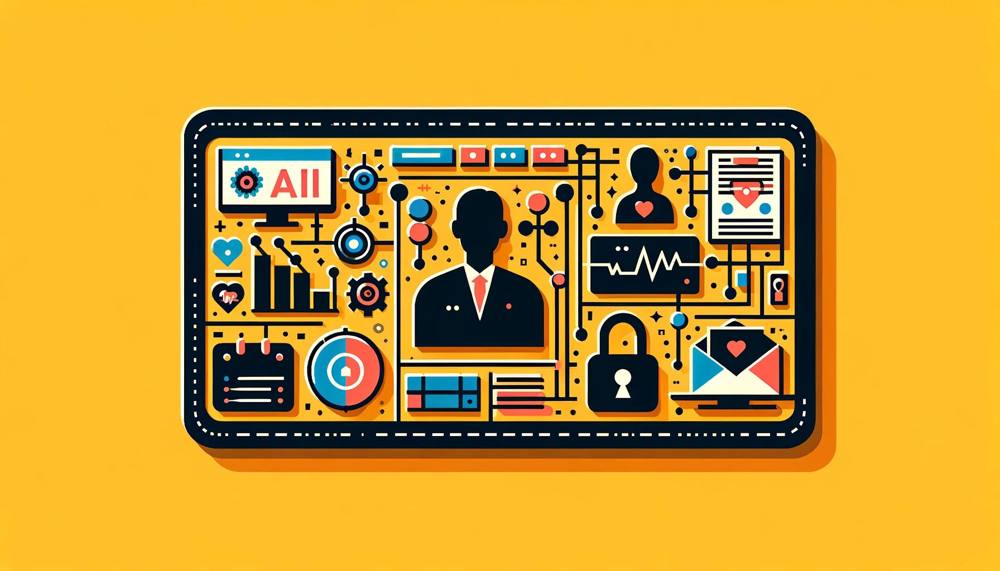
In April, Lisa Gibbs, News Director at The Associated Press, shared her insight at the International Journalism Festival in Perugia in the panel discussion "AI journalism: the next generation?". She explained how the international news agency has worked with automation since 2014 and presented this framework for implementing and using AI:
Identify tasks that the human members of the team dislike performing
Uphold the team's overarching mission
Set boundaries for which tasks AI should handle and which should be performed by humans
Map out the team's areas of expertise
Ensure data security
Performed with consciousness, AI will give us unprecedented opportunities to reshape how we communicate, create, and share knowledge.
OpenAI tools present viable solutions to current communication and dissemination challenges. For instance, the pervasive misinformation and 'fake news issues can be addressed using AI to fact-check information with unmatched speed and scale.
These tools can also enhance the dissemination of medical knowledge within the healthcare sector. They aid doctors in disease diagnosis and treatment selection, articulating these decisions to patients with clarity and empathy.
AI is reshaping our communication and knowledge-sharing processes and equipping us with cognitive tools to overcome emerging challenges in these domains.