
After five days at the International Journalism Festival in Perugia in April, I've been thinking a lot about one question: How will the rapid AI development in the media industry impact public health communication?
As a communicator in the field, I see both great opportunities and challenges ahead related to privacy, information security, and the right to one's data. However, the biggest challenge is the time it will take to adapt to the changes.
Health communication is an important field that encompasses the exchange of information between healthcare professionals, patients, relatives, and the population. In Norway, the responsibility for health communication is divided among several actors, such as healthcare professionals, health trusts, municipalities, counties, and national health authorities. The Health Personnel Act, the Patient and User Rights Act, and the Public Health Act regulate this responsibility.
The development of artificial intelligence (AI) in media can have significant consequences for health communication. AI-driven tools can help personalize health information, improve patient-AI interaction, and break language barriers. AI and automation have the potential to revolutionize how we disseminate health information. With advanced language models and analysis tools, we can tailor messages at the individual level and provide patients and relatives with customized information adapted to their needs.
The best tools
Adopting the media's AI strategies makes health communication more efficient, targeted, and user-friendly. At the same time, introducing AI must happen responsibly and ethically, focusing on privacy, security, and fair use. What is now state-of-the-art technology for media production will likely undergo several lengthy processes before it can be used in healthcare.
In the meantime, we cannot ignore that tools and services have come to market that far exceed national health services' ability to meet the demand for information. The health service and authorities must now closely monitor developments in communication and dissemination to assess how AI can best be utilized to improve health communication and the population's health.
Future health communication
In my field of rare diagnoses, the need for information is often remarkable, while the knowledge base can be limited. Here, AI can provide extra value through the ability to find information in both large and small data sets. At the same time, this raises important questions about privacy and data management. How do we ensure that sensitive health information is not misused or goes astray? Strict ethical guidelines, secure technical solutions, and transparent communication about collecting and using data will be crucial.
Rapid artificial intelligence (AI) development now requires health services and authorities to take a proactive role in shaping the future of health communication.
For fresh examples from the international media industry, check out the daily reports I have posted from Perugia on my LinkedIn profile.
Today's top-down and often slow public digitization processes contrast with the commercial AI offerings from tech giants, which can seem more responsive and user-friendly. For patients and professionals needing specialized and reliable information, especially in rare diagnoses and disease fields, this divide can create uncertainty about which sources they can trust.
Innovative and user-oriented
It is now essential that public actors not become passive spectators to this development but instead work purposefully to develop and implement AI-driven solutions that combine the best of the public and commercial sectors. This means ensuring high professional quality, user-friendliness, and privacy while being open to innovation and collaboration with private actors. By taking such a responsible and user-oriented approach, the health service and authorities can help build trust and ensure that all users, regardless of diagnosis or needs, have access to reliable and up-to-date health information.
Data minimization and purpose limitation
Privacy and the right to one's data are fundamental considerations that must be safeguarded when the health service and authorities develop and implement AI-driven solutions for health communication. All solutions must be built on the principles of data minimization and purpose limitation. This means that only personal information necessary for the specific purpose is collected and processed and that this information is not used for other purposes without explicit consent from the user.
Control over own data
Users must be given absolute control over their data. This means easily accessible and understandable tools for sharing and withdrawing consent, gaining insight into what information is being processed, and demanding correction or deletion of information. Users should also be able to deliver their data in a machine-readable format and transfer it to other services.
Built-in privacy
The solutions must have built-in privacy (privacy by design). This means that privacy is not added but is integrated into the design and architecture. Examples include anonymization, encryption, access control, and automatic deletion of no longer necessary data.
Informed choices
There must be openness and transparency around how personal information is processed. Users must be given clear information about what data is collected, how it is used, who it is shared with, and how it is protected.
Effective enforcement and control from supervisory authorities is also essential. The Norwegian Data Protection Authority and the Norwegian Board of Health Supervision must have the resources and tools to supervise compliance with privacy rules and to sanction breaches. Users must also have opportunities to complain and receive assistance if they believe their rights have been violated.
By building these principles into the development and use of AI in health communication, the health service and authorities can ensure that privacy is safeguarded and that users have control over their data.
Data-driven targeting
Insight from user data is an area where health communicators can benefit from the media industry's experiences. The media has long used data-driven audience understanding to tailor content and ads to different segments. This expertise can be transferred to health communication but with even stricter requirements for privacy and ethics.
In summary, the rapid development of AI will undoubtedly lead to significant changes in public health communication. Still, it will take considerable time to navigate the transition in a way that considers essential considerations such as privacy and trust. In the future, we must balance fast, accurate, personalized communication and protect sensitive information. This means using data in a responsible way to help, not exploit. To succeed within a reasonable time, it will be crucial to increase prioritization and investment in patient communication, technology, and ways of working that enable faster progress and implementation while safeguarding privacy and ethical principles.
Use of AI
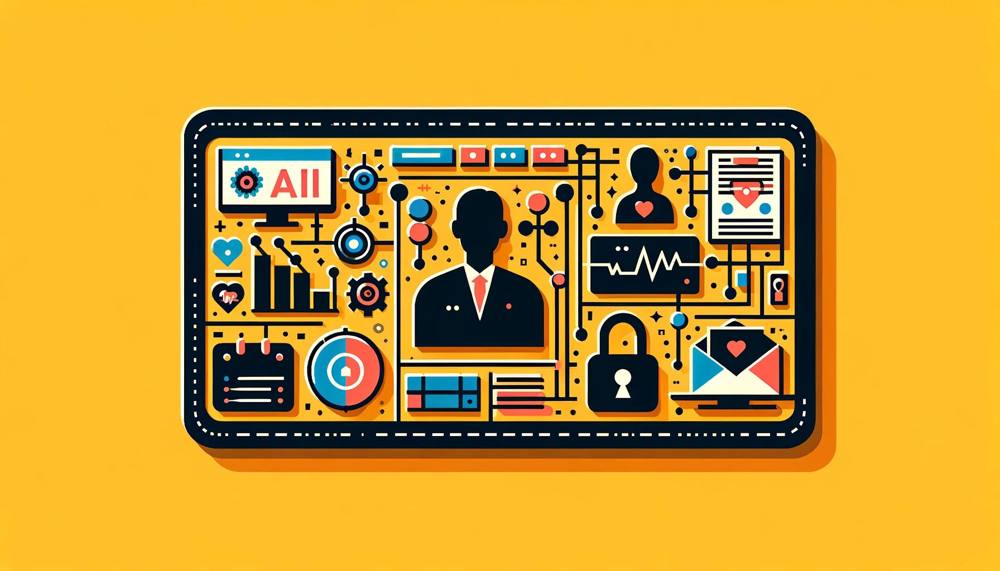
Based on my input and choices, the illustrations in The Creative Nexus are generated using the AI tools Midjourney and Dall-E. Although AI technology is a valuable tool, my ideas, human judgment, and professional insight ultimately define the content. AI supports and enriches creative work but does not replace the need for thorough research, ethical assessment, and editorial quality assurance. Through "The Creative Nexus," I wish to share insights, stimulate reflection, and invite dialogue around how AI influences and expands the communication field.